
Home, Boy | Adoption
Application | Adoption
Guidelines | Available Animals |Bad-Hair Day |
Books
Contact
Us | FAQ's About Rescue | Foster
Care | Foster Care Application
Herding Breed
Characteristics | Links |
Misc Mutt Stuff
|
Mission Statement |
Pet
Health and Safety
Radical Thoughts | Spay/Neuter
| Success Stories |
Surrendering/Last Resort |Volunteer
Application
Click here and you too can help us save a dogs lif
Before Disaster Strikes
Protect your pet's life
by taking these precautions
 Place an
out-of-state contact name and number, along with your own on your pet's
ID tag. Also known as: I.C.E. (In Case of Emergency)
Place an
out-of-state contact name and number, along with your own on your pet's
ID tag. Also known as: I.C.E. (In Case of Emergency)
 Have your pet's health certificate and a photo handy at all times to
prove ownership if you're separated from your pet during a disaster
Have your pet's health certificate and a photo handy at all times to
prove ownership if you're separated from your pet during a disaster
+ Keep your pet's vaccinations up-to-date in case you have to board your pet or leave the state
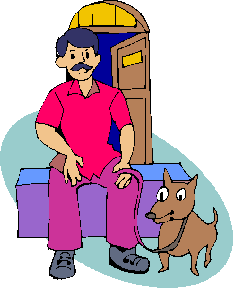 Purchase
a leash and a portable carrier large enough for your pet to stand up and
turn around in
Purchase
a leash and a portable carrier large enough for your pet to stand up and
turn around in
 Create a list of boarding facilities
within a 100-mile radius of your home, and a list of nearby hotels that accept
pets and under what circumstances
Create a list of boarding facilities
within a 100-mile radius of your home, and a list of nearby hotels that accept
pets and under what circumstances
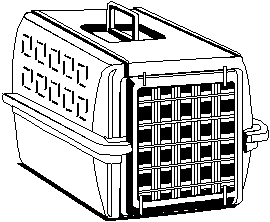 Ask your local animal
shelter if they have an evacuation plan for animals and if they'd be able to
care for your specific
type of pet during an emergency
Ask your local animal
shelter if they have an evacuation plan for animals and if they'd be able to
care for your specific
type of pet during an emergency
 List
friends and relatives who could care for your pet for an extended period of time
if you lose your home
List
friends and relatives who could care for your pet for an extended period of time
if you lose your home
 Take
your pet with you. If you must evacuate your house, do not leave your pet
behind. If it is unsafe for you to remain, then it is unsafe for your pet
as well
Take
your pet with you. If you must evacuate your house, do not leave your pet
behind. If it is unsafe for you to remain, then it is unsafe for your pet
as well
Sometimes it becomes necessary to have a back-up plan in the advent of an emergency. While most people are aware of what is needed for them, have they also thought about what pets might need in order to survive too?
The following link goes to a website that deals with just about all kinds of emergencies; it is dedicated to alerting people as to what to do, where to go and what is needed. among this is a great section on pets. Check out the link at: http://www.72hours.org
PLAN:
Most disaster shelters cannot accept pets because of health and safety regulations. Service animals for people with disabilities are an exception.
 | Arrange for a neighbor to check on your pets and take care of them if a disaster occurs while you are not at home. |
| Plan ahead for a friend or relative outside the affected area to shelter your animals if necessary. |
| Keep your pet’s ID tags up to date. Consider having your pet micro-chipped |
KIT:
Make a disaster Go-bag for each of your pets. Include the following:
| Sturdy leashes and/or carriers to transport pets. Animal shelters may require owners to provide a pet carrier for each animal. |
| Current photos of your pets in case they get lost. |
| Food and potable water, for at least one week. Bowls, cat litter and pan, plastic bags, can opener and pet toys. These items may not be immediately available in animal shelters. |
| Information on feeding schedules, medical conditions, behavior problems, immunization records and the name and number of your veterinarian in case you have to board your pets. |
RESPONSE:
|
Bring all pets into the house so that you won't have to search for them if you have to leave in a hurry. |
|
Do not try and hold onto your pet during the shaking of an earthquake or explosion. Animals instinctively protect themselves and hide where they are safe. |
|
Animals react differently under stress. Outside your home and in the car, keep dogs securely leashed. Transport cats in carriers. The most trustworthy pets may panic, hide, and try to escape or even bite or scratch. |
|
When you return home, give your pets time to settle back into their routines. Consult your veterinarian if any behavioral problems persist.
|
The Essential First Aid Kit

Be sure to have a first aid kit with you when you take your pup on a hiking or camping trip, or when you leave your pet in the care of others. This is what the Marin Humane Society recommends for a well-stocked first aid kit for your pet (name brand products are capitalized):
| Lots of bandages:
| ||||||||||||
| small scissors, nice and sharp | ||||||||||||
| nail clippers | ||||||||||||
| thermometer | ||||||||||||
| tweezers | ||||||||||||
| bulb syringe | ||||||||||||
| Q-tips | ||||||||||||
| nitrate strips or styptic powder for nails | ||||||||||||
| Benadryl, if your dog is allergic to bee sting) | ||||||||||||
| antibiotic ointments for small wounds | ||||||||||||
| hydrogen peroxide to induce vomiting as well as for cleaning of deep wounds | ||||||||||||
| Betadine for cleaning deep wounds | ||||||||||||
| ear cleaning solutions such as ChlorhexiDem, Epi-otic, Nolvasan | ||||||||||||
| eye wash solutions (saline/any contact lens solution) | ||||||||||||
| K-Y Jelly-water soluble | ||||||||||||
| any special medications prescribed by your vet |
Last updated on: 06/21/2013

 Back to the top